Friday, July 19, 2019

Nature's Evolution - using technology

Artist Ginny Ruffner imagines how nature evolves following an environmental apocalypse. And visitors to the museum in Washington DC can download an app that uses augmented reality to show how the evolution takes place.

How nature evolves

'Walk into a first-floor room at the Renwick Gallery of the Smithsonian American Art Museum and the high-ceilinged space looks, at first, quite desolate. Tree stumps made of glass sprout from five rock-like mounds, and at the center of the room, nestled in a sixth craggy habitat, stands a tree made of copper and glass. Otherwise, the landscape seems barren and nearly sapped of color.
But grab one of the red-cased tablets off the wall or unlock a smartphone, and the exhibition springs to life with an augmented reality display. Aim the device’s camera at the tree rings, and inventive flora of the future appear, gently swaying in a virtual breeze. The exquisite world created in the museum's new exhibition 'Reforestation of the Imagination' comes straight from the mind of the Seattle-based artist Ginny Ruffner, who decided to ponder the imponderable—in the aftermath of an apocalyptic mass extinction event, how might life on Earth continue to evolve and thrive?' (taken from the site)

And for those of you who have seen the Dinosaur r'Evolution exhibition at the Tasmanian Museum and Art Gallery in Hobart, you may already have experienced this amazing augmented reality. If you haven't, then be sure to visit it in Launceston at the Queen Victoria Museum at Inveresk.

It is worth a look!!

I took these photos of the augmented reality at the Dinosaur Symposium in Hobart earlier in the year.


The dinosaur is at first just a skeleton


The dinosaur then magically become flesh and wanders around


The developer of the program then has multiple dinosaurs (holograms) all over the stage


Monday, July 8, 2019

Saving the Tasmanian Albatross

Albatross Island, off Cape Grim in the far north-west corner of Tasmania, is both wind-swept and remote, but it is home to some 5,000 Albatross. Living up to 40 years they have a wingspan of up to 2.5 metres and are a beautiful, majestic bird. And although they spend much of their lives at sea, Albatross Island welcomes each couple, which mates for life, every year to breed and raise just one chick.

The marine environment is now changing through increasing sea surface temperatures and acidification, as well as altered wind patterns. The Albatross's prey is decreasing and they are forced to spend more time at sea in search of food.

Unlike other birds, these Albatross cannot just move to another location; they have evolved over the centuries to be in one particular place and cannot adapt to the changing environment. Less than half of their fledglings now survive to return to the island each year and their numbers are declining.

But the Tasmanian CSIRO is attempting to arrest that decline.

Scientists are now attaching miniature monitoring devices to the birds in the hope of gathering data that can help them understand the issues affecting them. And they are building artificial nests that are designed to withstand the rapidly changing Bass Strait weather, and have already seen a 20 per cent higher success rate with fledglings.

These magnificent iconic birds deserve our respect - and we applaud the CSIRO for their action.


Information from The Power of One, AFLOAT.com.au, May 2018.
Photographs courtesy of Tasmanian Albatross Fund (www.tasmanianalbatrossfund.com.au/)

Friday, June 14, 2019

Catching up on Wildlife

My plan was to blog weekly but somehow life just seems to get in the way. So, in an effort to get myself back on track here is the latest instalment - with a promise for more regular posts in the future. These are photos of animals and birds I have seen up close in the past six months.


Aren't they wonderful!


Sunday, May 5, 2019

Animals of the Middle East - Camel, Falcon and Jellyfish

Camel

The Dromedary, or Arabian Camel, inhabits the Middle East and makes up 94% of the world’s camels. A camel can live for 40 to 50 years and stands 1.85 metres tall at the shoulder and 2.15 metres tall at the hump. It can run up to 65 km/h in short bursts or up to 40 km/h at sustained speed. The camel has long been domesticated and provides milk and meat, and fibre from hair. It is a vital means of transport in the desert.

Interesting Facts

·         The hump of the camel is a reservoir for fatty tissue which helps it to survive in hot climates.
·         It need only drink once every 10 days, even in very hot conditions. When it exhales water vapour is trapped in its nostrils and then reabsorbed into its body, enabling it to conserve water.
·         It is able to withstand changes in body temperature that would kill most other animals. At sunrise it temperature is 34 C and this steadily increases to 40°C by sunset, before it cools off at night.
·         Camel racing is the main racing sport in the United Arab Emirates.

According to Wikipedia, ‘around 700,000 dromedary camels are now feral in Australia, descended from those introduced as a method of transport in the 19th and early 20th centuries. This population is growing about 8% per year. Representatives of the Australian government have culled more than 100,000 of the animals in part because the camels use too much of the limited resources needed by sheep farmers.’


 Falcon

The national bird of the United Arab Emirates (UAE), the falcon is a ‘symbol of force and courage’. It plays an important role in Arab tradition and culture with one-third of the world’s falconers being Arabs.

The falcon is a fast flying hunter that easily takes prey in the air. Adult falcons have thin, tapered wings enabling them to fly at high speed and quickly change direction. The peregrine has been clocked at 290 km/h in a stoop, or dive. And although the falcon strikes its prey with its sharp claws, it generally kills with its beak.

The falcon, like many birds of prey, has exceptional vision with one species measured at 2.6 times that of the average human. The largest falcon is 65cm long, the shortest is 25cm long and the females are bigger than the males. Falcons are distributed across the world, except in Antarctica.

Interesting Facts

·         The falcon is by far the leading ‘pet’ in the UAE.
·         The world’s first falcon hospital opened in Abu Dhabi in 1989.
·         The traditional term for a male falcon is tercel (from the Latin tertius meaning ‘third’) because it is believed that only one in three eggs produce a male bird.


 Jellyfish

The medusae has been in existence for at least 500 million years and was renamed jellyfish in 1796. It is a mainly free-swimming marine animal with a near transparent body, umbrella-shaped bells and trailing tentacles armed with stinging cells used to defend against predators and capture prey. Most species grow quickly and mature within a few months but die soon after breeding.

The jellyfish looks peaceful as it glides gracefully through the water, but at times it will form vast swarms and can be responsible for damaging fishing nets or clogging cooling systems of power and desalination plants. It moves through the water by radially expanding and contracting its body to push water behind it.

The jellyfish is generally carnivorous and feeds on plankton, crustaceans, small fish, fish eggs and larvae, and other jellyfish. It ingests its food and the waste is repelled from its mouth.

Considered a delicacy in some Asian countries, the jellyfish is eaten by humans in other cultures too. It is used in research where the green fluorescent protein produced by some species has been adapted as a fluorescent marker for genes inserted into other cells or organisms.

Interesting Facts

·         There are some jellyfish that are not mobile and are in fact anchored to the seabed by stalks.
·         It is the most energy efficient swimmer of all animals.
·         It is causing problems all over the Middle East due to its growing numbers.


Sunday, March 24, 2019

Charismatic Capybara

About

The capybara is the world's largest living rodent. This semi-aquatic mammal comes from South America where it lives in dense forest near water. It can grow 134 cms long, 62 cms tall and weigh anywhere from 35 to 66 kgs and its nearest relative is the guinea pig.


The capybara is an herbivore that eats grass, fruit, tree bark and aquatic plants, but during the dry season its diet expands to include a greater variety of plants. It loves to socialise and gets around in groups of 10-20 but in the dry season it is known to be found in groups of as many as 50 to 100. It also mixes well with other animals.

We saw capybaras at the Auckland Zoo last year including a number of babies. Interestingly, the mother rejoins the group a few hours after delivering her babies, usually about four. And the babies also join the group quickly as within a week they are already eating grass.


Capybaras with babies at the Auckland Zoo

Curiosities
  • The capybara can run as fast as a horse and is an excellent swimmer. It can stay fully submerged for up to five minutes.
  • It is a gentle animal that makes a great pet, but more than one is recommended.
  • Other birds and animals love to perch on top of it in order to get a free ride.
  • It can live for up to 12 years in captivity.
Conservation

The capybara is not threatened but it is hunted in some regions in South America for its pelt and meat, and in some areas is farmed.

There are capybaras in many Australian zoos, including this one at the Tasmania Zoo at Riverside.


Monday, March 18, 2019

Dashing Dinosaurs

Anyone who knows me knows of my passion for animals, but this also includes the pre-historic kind.

My love of dinosaurs began in 2009 when I visited the Lark Quarry Dinosaur Trackways at Winton in Queensland, and saw the actual footprints of animals that lived some 95 million years ago.

Of course dinosaur discoveries have occurred since the early 1800s, around the world. But recently, on Victoria's Gippsland coast, the fossilised remains of a new species of herbivore dinosaur have been uncovered. This wallaby-sized dinosaur, known as Galleonosaurus dorisae, is 125 million years old.


Interestingly, when this dinosaur was roaming the earth, Australia was still joined to Antarctica and a huge volcanic ridge connected us to New Zealand.

Scientists hope that this latest discovery will help them to understand how Australian dinosaurs fit into the dinosaur family around the planet.

And hopefully I will learn more about this and many other dinosaurs at The Royal Society of Tasmania's A Symposium: Dinosaurs and Evolution of Life this weekend!

Monday, March 11, 2019

Books for Animal Lovers

This post isn't about an animal, its about lots of different animals. And if you like reading about animals then this is for you - I highly recommend all four books.

The Travelling Vet by Jonathan Cranston is a collection of tales from a young vet who works in a vet practice in Oxfordshire, England but also travels the world treating everything from guinea pigs to giraffes. Its funny and its moving but there's always something different.


Our Zoo by June Mottershead follows the extraordinary journey of a young girl who, with her father George, set up the Chester Zoo in England in the 1930s. An inspiring story of determination.


The Last Rhinos by Lawrence Anthony, described as the Indiana Jones of conservation. Apart from his incredible, and often dangerous, attempts to try to save the northern white rhino, Anthony runs his own game reserve in South Africa and has saved hundreds of animals.


And for those who would rather just look at the pictures, then you just have to see The Photo Ark by Joel Sartore, whose goal is to photograph every animal on earth, before it becomes extinct. Wonderful book, full of beautiful photographs of animals you know and some you've never even heard of!


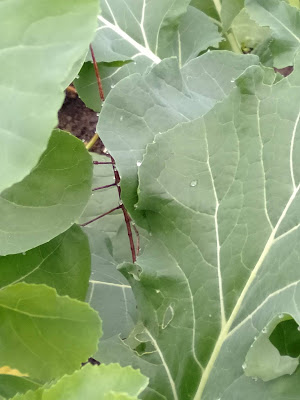
Stephanie the Stick Insect

 Allow me to introduce you to the newest member of our family. We discovered Stephanie under the ever enlarging leaves of the broccolini in ...